The candidate looks right on paper. The résumé lists a DC-3 for forklift operation, completed online two weeks ago, and HR wants to know whether this person can start on the dock on Monday. That is the everyday form of the online forklift certification question in Mexico, and the answer depends less on the certificate than on what your plant does before handing over the keys.
Is online forklift certification valid in Mexico?
NOM-006-STPS-2023, the Mexican Official Standard (NOM) that covers forklifts, does not mention any operator license. What it relies on is the DC-3, the certificate of competencies or labor skills defined in article 153-V of Mexico's Federal Labor Law and issued to a worker who passes a training course.
The STPS, Mexico's federal labor ministry, accepts distance learning. Its training agreement, published in the Federal Official Gazette (DOF) on June 14, 2013, says that for online courses the certificate only needs the name of the online tutor (article 24). The same agreement grants no curricular or academic value to any training course (article 15) and bars certificates from suggesting that the STPS endorses them (article 25). So the online format is legitimate, and the limit comes from the forklift standard itself. Treat an online DC-3 as proof of classroom work, and plan the hands-on part at your site.
What NOM-006-STPS-2023 requires from forklift training
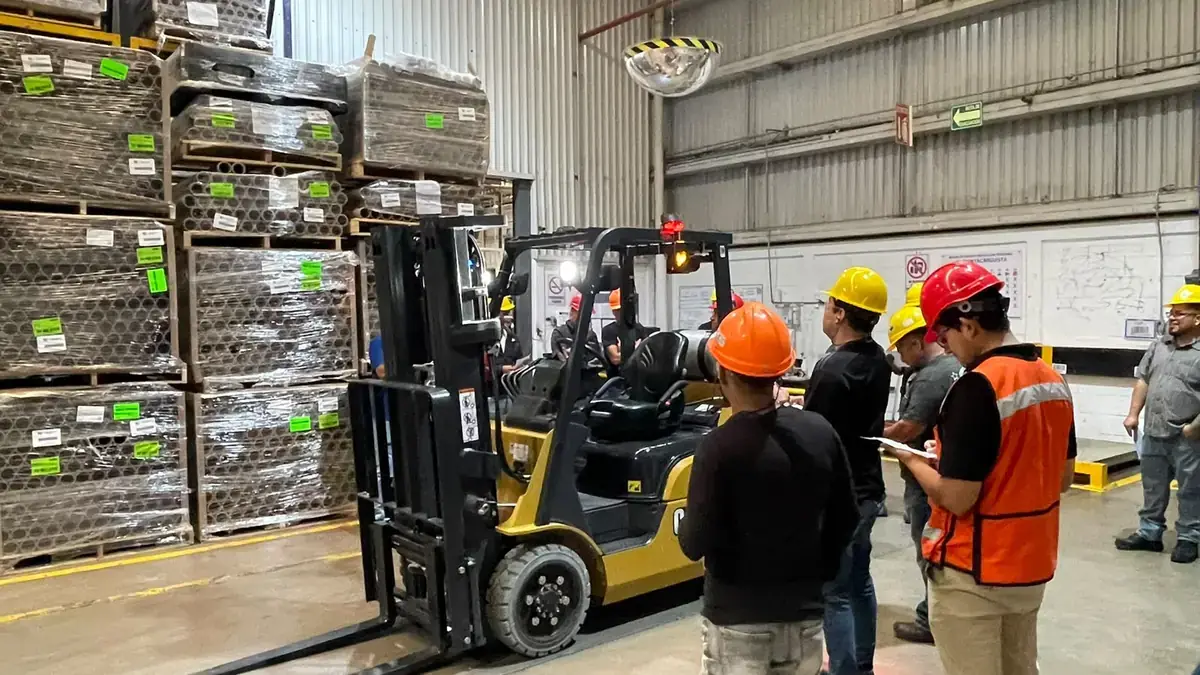
NOM-006-STPS-2023 was published in the DOF on March 7, 2024, and replaced NOM-006-STPS-2014. Section 10.3 requires training for installers, maintenance staff, operators and their helpers to consist of theoretical instruction, practical training and an evaluation of the knowledge and skills acquired. The syllabus covers how the machine works, safety procedures and controls, capacities and limits, pre-shift checks, weather conditions that force a stop, and emergency response.
Other rules shape the program. New hires get an induction course (10.1). Training is refreshed at least every two years, or sooner when new machinery arrives or procedures or operating areas change (10.4). Every truck is operated only by personnel trained and authorized by the employer (8.5.2). Our guide to the NOM-006-STPS-2023 forklift rules covers the rest of the standard.
For a US reference point only: OSHA's forklift rule (29 CFR 1910.178(l)) also combines formal instruction, which may include interactive computer learning, with practical training and an evaluation in the workplace, and it asks for a performance evaluation at least once every three years. The two are separate legal regimes. Plants used to the US three-year cycle should reset their calendar in Mexico, where the refresher comes due in two.
Why does a candidate's DC-3 not cover your plant?
A DC-3 belongs to an employer's training process. Under article 24 of the training agreement, it is authenticated by the company's joint training committee (Comisión Mixta de Capacitación, mandatory above 50 workers under Federal Labor Law article 153-E) or by the employer in smaller companies. NOM-006-STPS-2023 asks your workplace to keep records of the training it provides (10.5), and the authorization to drive in your plant has to come from you.
None of this is a reason to turn the candidate away. An online course shows initiative and covers theory you would otherwise teach. Your plant still evaluates the person on its own trucks, documents that training and issues the authorization. The authorization to drive on your floor is yours to give, and it should follow your own evaluation.
New operators also sit in the highest-risk group: 48.2% of work accidents and occupational illnesses in Mexico involve people with less than one year in the job (IMSS, the Mexican Social Security Institute, Statistical Report 2025, table VII.12).
Where online training fits, and where it stops
Mexico's government runs two free online platforms. PROCADIST, from the STPS, offers no-cost courses, and its own FAQ states that its participation certificate is not equivalent to a DC-3. CLIMSS, from the IMSS, is also free and reports 23 million enrollments (CLIMSS, 2026). Both work well for theory. Neither puts a trainee on a forklift.
Commercial online DC-3 courses sell for MXN 100 to 1,000 per course, with an online exam and an instant certificate (vendor sites reviewed in September 2026). Searches for "dc3 en línea" grew 900% year over year in Google Ads Keyword Planner data for Mexico (September 2025 to August 2026). Some offers go further and sell the certificate with no course behind it. Under article 24 of the training agreement, a DC-3 goes to a worker who passed the course through its evaluation, so a certificate without a course documents nothing your plant can defend after an incident.
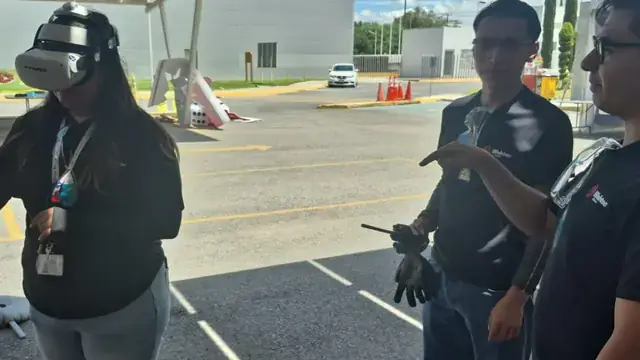
A blended design uses both formats. Operators study the theory online before the session, and the instructor's hours go to the pre-shift inspection, loaded maneuvers and the skills evaluation on your trucks. A blended course keeps theory cheap and puts the instructor's time where the risk sits, on the truck.
How do you verify a forklift training provider?
Start with the registration. External training agents appear in the STPS public directory (agentes.stps.gob.mx), and certificates from an external agent can only be uploaded to SIRCE, the STPS training registry, while that registration is active. Then check the paperwork: the DC-3 must be delivered within 20 business days after the course (training agreement, article 24) and must not carry STPS logos or claims of endorsement (article 25). Verify the registration before the purchase order, since a certificate is only as solid as the agent behind it.
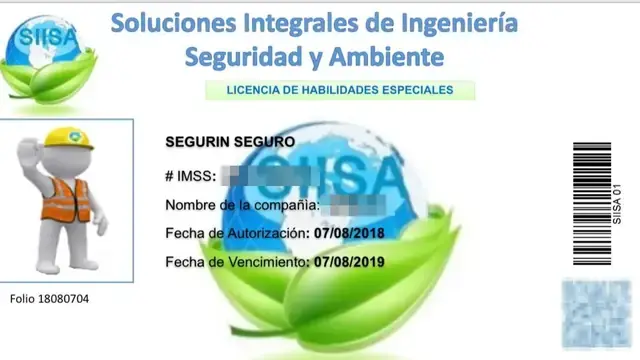
If the provider trains on your premises, ask for its REPSE registration, the federal registry Mexico requires for specialized services performed at a client's site (Federal Labor Law, articles 13 to 15). Hiring an unregistered provider exposes the client to the same fine, 2,000 to 50,000 UMA (article 1004-C). SIISA Consultores is listed in the REPSE under folio 325941, valid through August 7, 2028, for industrial training, and issues DC-3 certificates under the external training agent registration of its lead instructor. The DC-3 safety training page lists its courses for plants in San Luis Potosí.
Refresher cycles, records and the cost of a gap
Put the two-year refresher in the training plan on the day an operator is authorized, and plan an earlier one when the equipment changes. Section 10.4 calls for it when new machinery or equipment is introduced, and a reasonable reading includes a rental truck of a type your operators have not driven. If peak season brings in a unit through forklift rental, schedule the refresher with the delivery.
Keep the training record section 10.5 asks for, including the instructor's STPS training agent number where one applies. Failing to train is fined at 250 to 5,000 UMA under Federal Labor Law article 994, section IV. With the 2026 UMA (Mexico's daily unit of measure for fines) of MXN 117.31, that is MXN 29,327.50 to 586,550 per affected worker (article 992). The breakdown is in our guide to STPS fines in Mexico.
Frequently asked questions
What DC-3 training does the STPS require for forklift operators?
NOM-006-STPS-2023 requires an induction course for new hires (section 10.1) and, for operators and their helpers, training with theoretical instruction, hands-on practice and an evaluation of knowledge and skills (10.3). The training is evidenced with a DC-3, Mexico's certificate of labor skills.
How often is forklift training renewed in Mexico?
A DC-3 has no expiration date of its own, because each standard sets its own cycle. For forklifts, NOM-006-STPS-2023 requires a refresher at least every two years, or sooner when new machinery arrives or procedures or operating areas change (section 10.4).
Who can sign a DC-3 and how long does it take?
An external training agent issues it, or the employer when the instructor is in-house, and in companies with more than 50 workers the joint training committee authenticates it. It must be delivered within 20 business days after the worker passes the course (STPS training agreement, DOF June 14, 2013, article 24).
Is there a forklift license in Mexico?
NOM-006-STPS-2023 does not mention a license to operate a forklift. It requires training with practice and evaluation, a DC-3 as evidence and the employer's authorization for each operator (section 8.5.2).