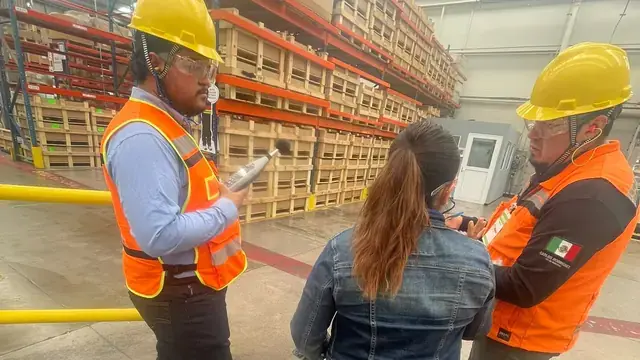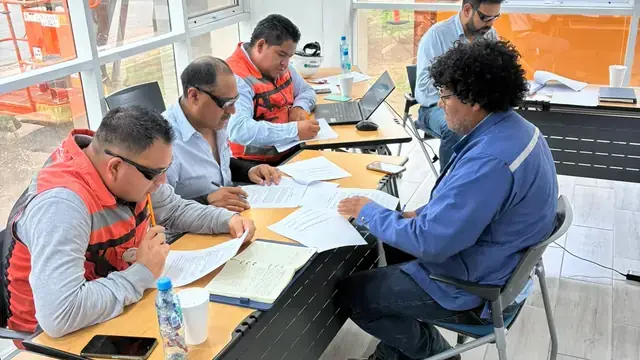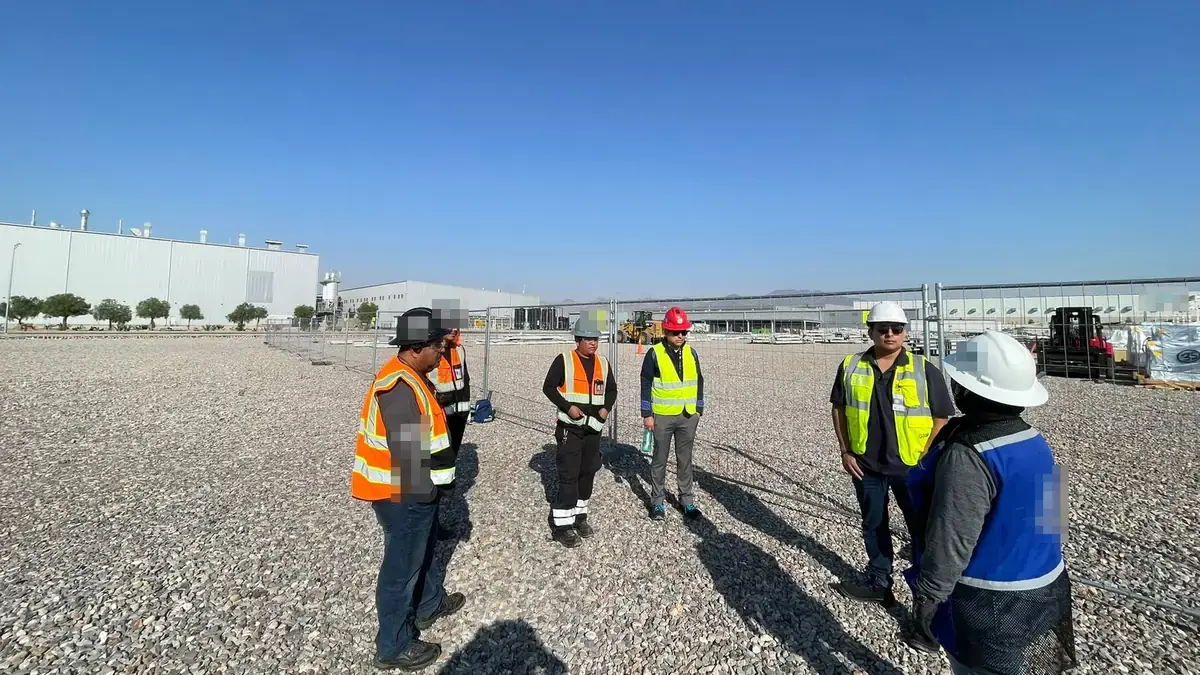
Twelve workers or 2,000, the rule is the same. NOM-019-STPS-2011 requires every work center in Mexico to keep at least one safety and health commission, staffed by management and worker representatives who walk the site at least once a quarter and sign minutes of what they find. If your corporate EHS system already runs a safety committee, most of the habits are in place. What a plant in San Luis Potosí still needs is the Mexican layer: who appoints the members, what the minutes must contain and the yearly training an inspector will ask to see. Our STPS compliance consulting covers the commission's setup, walk-throughs and minutes.
What is the safety and health commission in Mexico?
The standard is NOM-019-STPS-2011, published in the DOF (Mexico's Official Gazette) on April 13, 2011. Its Spanish name, comisión de seguridad e higiene, translates literally as "safety and hygiene commission", and English documents call it a committee or a commission. It applies to "all work centers" in the country (section 2), with no minimum headcount. Mexico's Ministry of Economy catalog of standards shows a systematic review dated May 13, 2026 with the result "confirmation", so the 2011 text is still the one inspectors apply.
The legal basis is the Federal Labor Law (LFT). Article 509 calls for commissions with equal numbers of worker and employer representatives to investigate the causes of accidents and illnesses, propose preventive measures and monitor that they are followed. Article 510 adds that members serve without extra pay and during working hours.
Headcount changes the format of the commission, never the obligation to have one. Below 15 workers, one worker plus the employer or a representative is enough. At 15 or more, the commission has a coordinator, a secretary and as many members (vocales) as management and the workers' side agree (7.1).
Who appoints the members in a Mexican plant?
The employer sets up the commission and appoints its own representatives (5.1 and 5.2). The workers' representatives are appointed by the union that holds the collective bargaining agreement or, without a union, by a majority of the workers, at the employer's request (5.3 and 6.2). They must work at that site and, preferably, have safety and health knowledge or experience (7.2).
At setup, the coordinator comes from the management side and the secretary from the workers' side (9.1). Appointments last two years, and after that the two roles alternate between the sides. The founding minutes (acta de constitución) record company data, including the RFC tax ID, the IMSS employer registration (IMSS is the Mexican Social Security Institute), headcount and number of shifts, plus the setup date and signatures (7.4). They are updated whenever membership changes (5.4), and the employer shares the member list with the workforce, with each person's job, shift and area (5.12).
The written request to the union or the workers is its own item on the inspector's checklist, so file a copy with the founding minutes.
Can your corporate safety committee count under NOM-019?
Partly. If your EHS system already runs a site safety committee, its meetings can carry the commission's work when four conditions hold:
| NOM-019 requirement | Section | What to check in your committee |
|---|---|---|
| Worker representatives appointed by the union or the workers | 5.3, 6.2 | Who chose the worker members |
| Members who work at that site | 7.2 | Whether regional or corporate staff sit on it |
| Minutes with the contents listed in the standard | 9.12 | Whether your form covers every item |
| Records kept for two years | 12.4 | Whether your retention policy reaches two years |
A company may add commissions that consolidate work across several sites (7.6), and a large plant may form more than one by shift, area or in-plant contractors (7.5). A global EHS committee can keep meeting, but each Mexican work center still needs its own commission with NOM-019 minutes.
Quarterly walk-throughs and the minutes an inspector reads
The commission's annual walk-through program is due within the first 30 calendar days of each year (9.3), which puts the 2027 deadline at January 30. It prioritizes the areas with the most hazards and those with incidents, accidents or illnesses (9.4), and the employer must hand the commission the safety and health diagnosis prepared under NOM-030-STPS-2009 (5.8).
Ordinary walk-throughs happen at least quarterly (9.5). An extraordinary one is due within 30 calendar days of a fatal or permanently disabling accident or illness, a significant change in facilities or processes, or a worker report the commission considers justified (9.9). Follow-up on proposed measures is also at least quarterly (9.11).
The coordinator and secretary write the minutes after each walk-through and hand them to the employer (8.2 and 8.3). Section 9.12 sets the contents: ordinary or extraordinary, dates and times, areas covered, hazards and unsafe acts found, accident causes, measures, prioritized recommendations, follow-up on earlier recommendations and the signatures of those who took part.
Since December 15, 2025, the STPS rules for workers who stand on the job, known as Mexico's "Chair Law" (DOF July 17, 2025), have been enforceable. They reach industrial plants where the nature of the work allows it, and they require the commission's walk-through minutes to record the risks for each person working on their feet and the preventive measures. The evaluator the employer appoints for that record must be a commission member.
What training does NOM-019 require for members?
The employer must train commission members at least once a year (5.13), under an annual program that names the members, topics, course length, schedule and the person responsible (10.1). The standard does not set a number of hours. Its eight minimum topics (10.2) are the employer's and workers' duties, how the commission is formed, the roles of coordinator, secretary and members, the commission's functions, the safety and health topics that apply to the site, the safety measures required there, a method to spot unsafe conditions and acts, and a procedure to investigate accident causes. New members get an immediate induction on the first four (10.3).
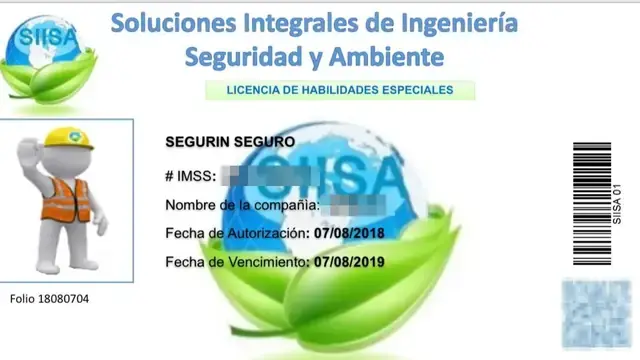
Nothing in the standard requires an outside instructor. As evidence it accepts the program plus diplomas, certificates or skills certificates (12.3), and the DC-3 is Mexico's certificate of labor skills (LFT art. 153-V). Two of the eight topics are your plant's own hazards and controls, so the course has to start from your site's risk map. SIISA delivers the commission course at your plant as part of its DC-3 safety training catalog, quoted per group, and each participant who passes receives a DC-3.
How it differs from the training committee and NOM-030
Mexican plants also run a joint training committee (Comisión Mixta de Capacitación, Adiestramiento y Productividad), required in companies with more than 50 workers (LFT art. 153-E). It oversees training programs and authenticates DC-3 certificates, as covered in our guide to STPS DC forms. The NOM-030 safety officer is a single person the employer designates, internal or external, who prepares the diagnosis and program described in our guide to the safety officer in Mexico. Neither one replaces the commission.
An STPS inspector (STPS is Mexico's federal labor ministry) reviews the founding minutes, the request to the union, the walk-through program and minutes, the NOM-030 diagnosis hand-off, quarterly follow-up, the shared member list and the training program with its evidence (12.3). Failing to observe safety and health standards carries fines of 250 to 5,000 UMA, Mexico's daily unit for fines, per affected worker: MXN 29,327.50 to MXN 586,550 with the 2026 UMA of MXN 117.31 (LFT arts. 992 and 994, section V). Our guide to STPS fines in Mexico shows how those amounts add up.
Frequently asked questions
Does a small site in Mexico need a safety and health commission?
Yes. NOM-019-STPS-2011 applies to every work center with no minimum headcount. Below 15 workers, one worker plus the employer or a representative is enough, recorded in founding minutes.
How often must the commission inspect the plant?
At least once a quarter, following an annual program set within the first 30 calendar days of each year (sections 9.3 and 9.5 of NOM-019-STPS-2011). Extraordinary walk-throughs are due within 30 calendar days of a fatal or permanently disabling accident, a significant change in facilities or processes, or a justified worker report.
How often must commission members be trained?
At least once a year, under an annual program that lists members, topics, course length and the person responsible (sections 5.13 and 10.1). New members receive an induction course right away on the commission's duties, structure, roles and functions.
Do commission members get paid extra for this work?
No. Article 510 of the Federal Labor Law says commission work is performed without extra pay and during working hours. The employer must also give members the facilities to do the job, and an inspector can confirm that by interviewing a member.
Is the safety and health commission the same as the joint training committee?
No. The safety and health commission comes from NOM-019-STPS-2011 and applies to every work center, while the joint training committee is required in companies with more than 50 workers under Federal Labor Law article 153-E and oversees training. A plant above 50 workers needs both, each with its own records.